
The Basecamp Way To Work
Before you dive into Basecamp, it's worth understanding a few ideas that shape how it works. They're simple, but once they click, everything else will make sense. Scattered information is the enemy of good work. Email threads, side conversations, and the one person who always seems to know where everything is... when information lives everywhere, your job becomes managing chaos, and the real work gets left behind. Basecamp is your antidote to all that.
Your work lives in Projects
In Basecamp, everything is organized into Projects. A Project can be anything your team is working on: a client engagement, a product launch, a company rebrand, or just the ongoing work of a department. If it involves more than one person and needs a place to live, it's a Project.
Projects aren't just for traditional project work, though. Teams use them for things like onboarding new employees, running company-wide announcements, or keeping HR documents somewhere everyone can find them. A project is really just a shared space with a clear purpose. You decide what that purpose is.
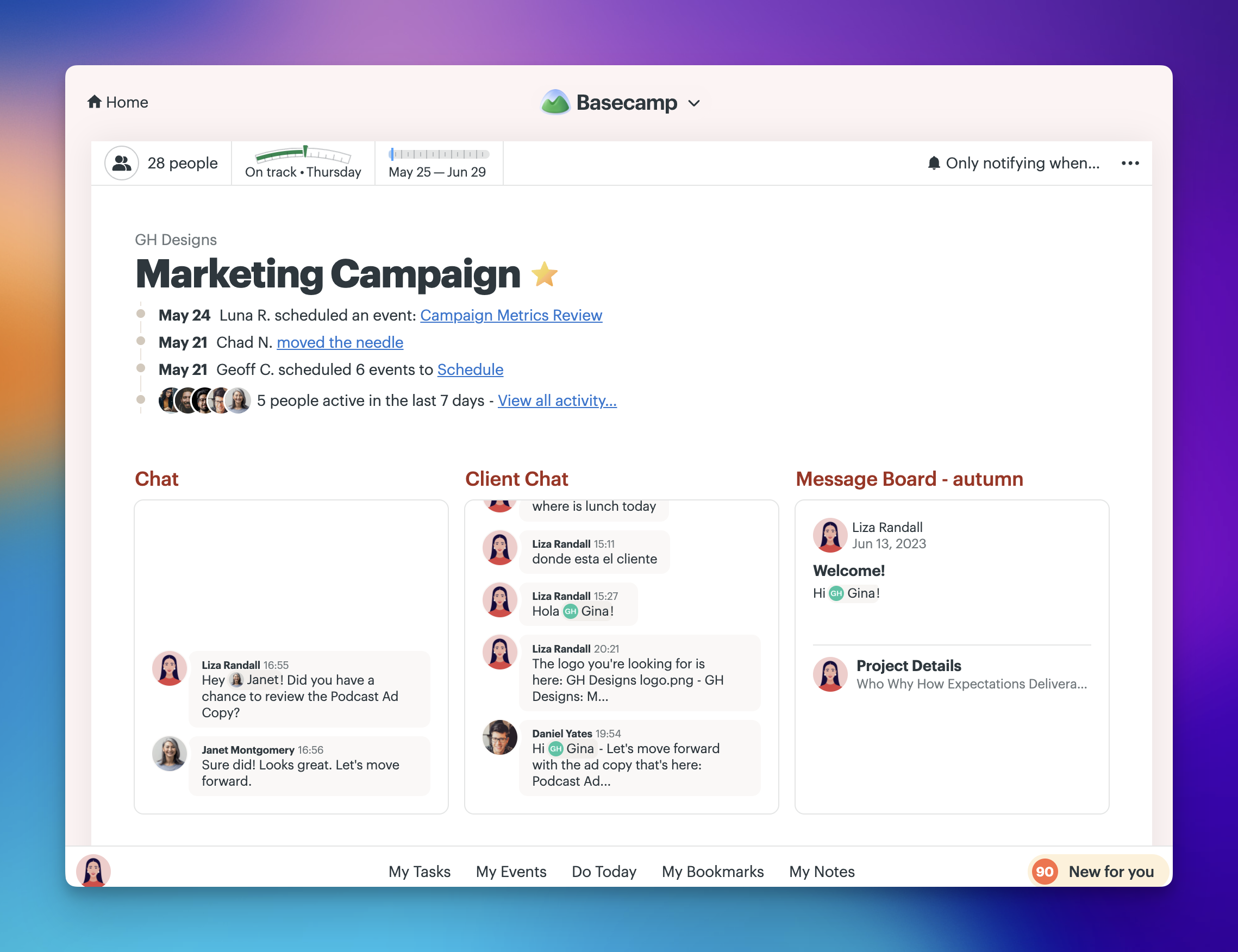
The right tools for the work
Every Project in Basecamp comes with a set of tools: a Message board for announcements and decisions, To-dos for tracking work, Chat for real-time conversation, a Schedule for events and deadlines, Docs and Files for reference material, and Card Tables for process-driven work. Choose which ones you need and you can add more than one of the same tool if the work calls for it.
Flexibility matters. A small internal project might only need chat and a to-do list. A complex client engagement might have a Card Table for active work and another for feedback, plus a Message Board and a Schedule. Basecamp doesn't impose a structure on you. You build the Project that fits.
Communication stays where it belongs
In Basecamp, communication stays attached to the thing it's about. Take a To-do for designing a login page: the design decisions, the feedback, the back-and-forth about whether the button should be blue or green, all of it lives right on that To-do. The full story of anything is always right there with the work itself.
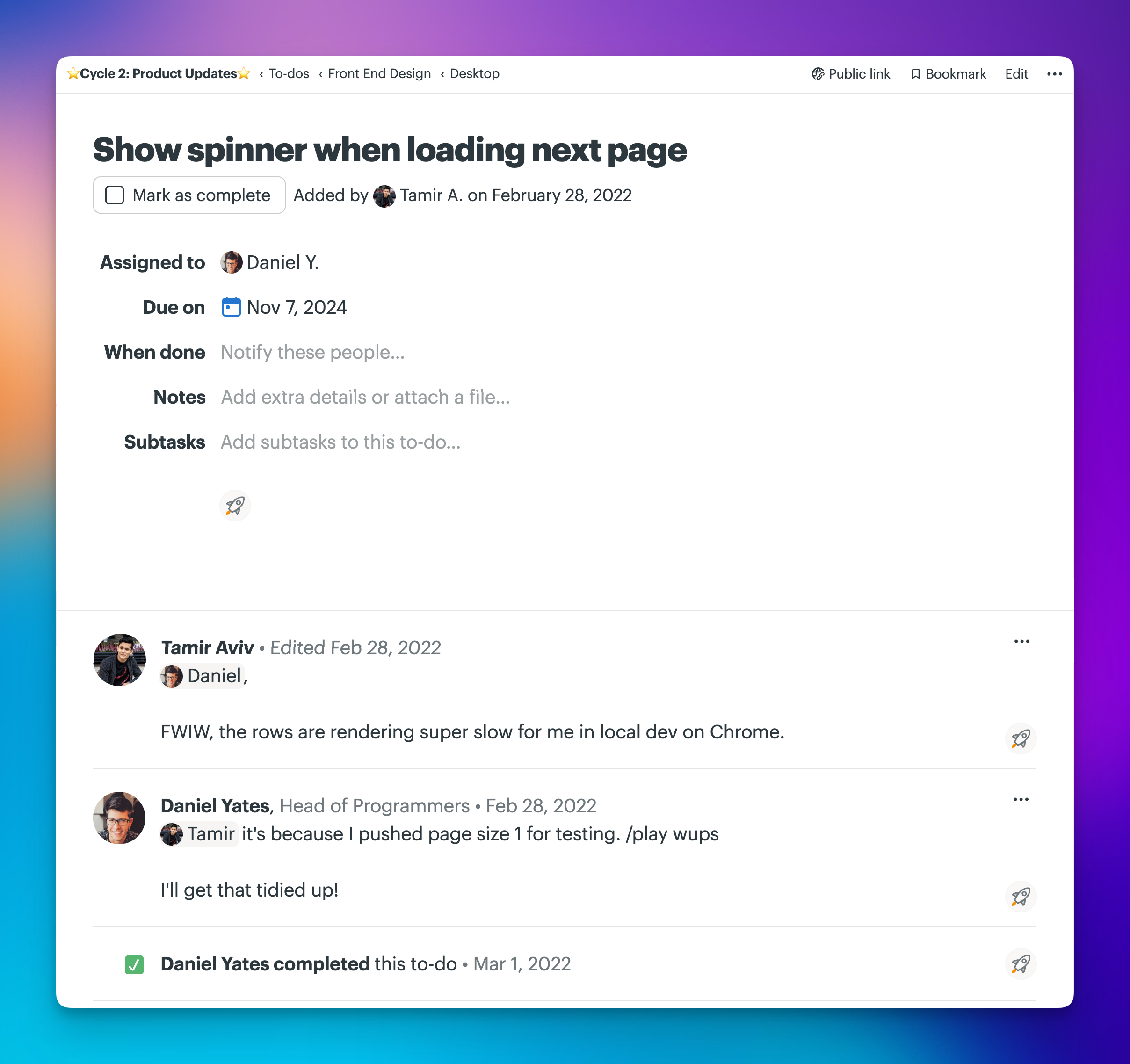
That means when someone joins a project late, or needs to revisit a decision made three weeks ago, everything they need is in one place — not buried in an inbox or lost in a chat thread. Over time, that adds up to something bigger than organization. It starts to feel like a calmer, clearer way to work.
What it looks like when it clicks
The teams that get the most out of Basecamp tend to find a rhythm. They use (Automatic Check-ins) to replace status meeting. A simple recurring question like "what did you work on today?" keeps everyone in the loop without pulling anyone into a room. They run their work in (Cycles), kicking off each one with a clear plan and closing it with an honest reflection on what got done. Over time, Basecamp becomes less of a tool to learn and more like a living history of how the work happened and why decisions got made.
You don't need any of that to get started. It comes together as you and your team find what works.